Plants
Yellow Water Lily
Nuphar lutea
Origin: The yellow water lily is widespread in Europe, western Asia, and North Africa. It grows in still and slow-flowing waters — rivers, lakes, and ponds — rooting by a stout rhizome in the silty bottom.
Also known as: Spatterdock, Brandy bottle, Nuphar lutea
Fact sheet
- Height
- 60 cm
- Temperature
- 10–26 °C
- pH
- 6–7.5
- Lighting
- Medium
- CO₂
- Not needed
- Growth rate
- Medium
- Placement
- Background
Overview
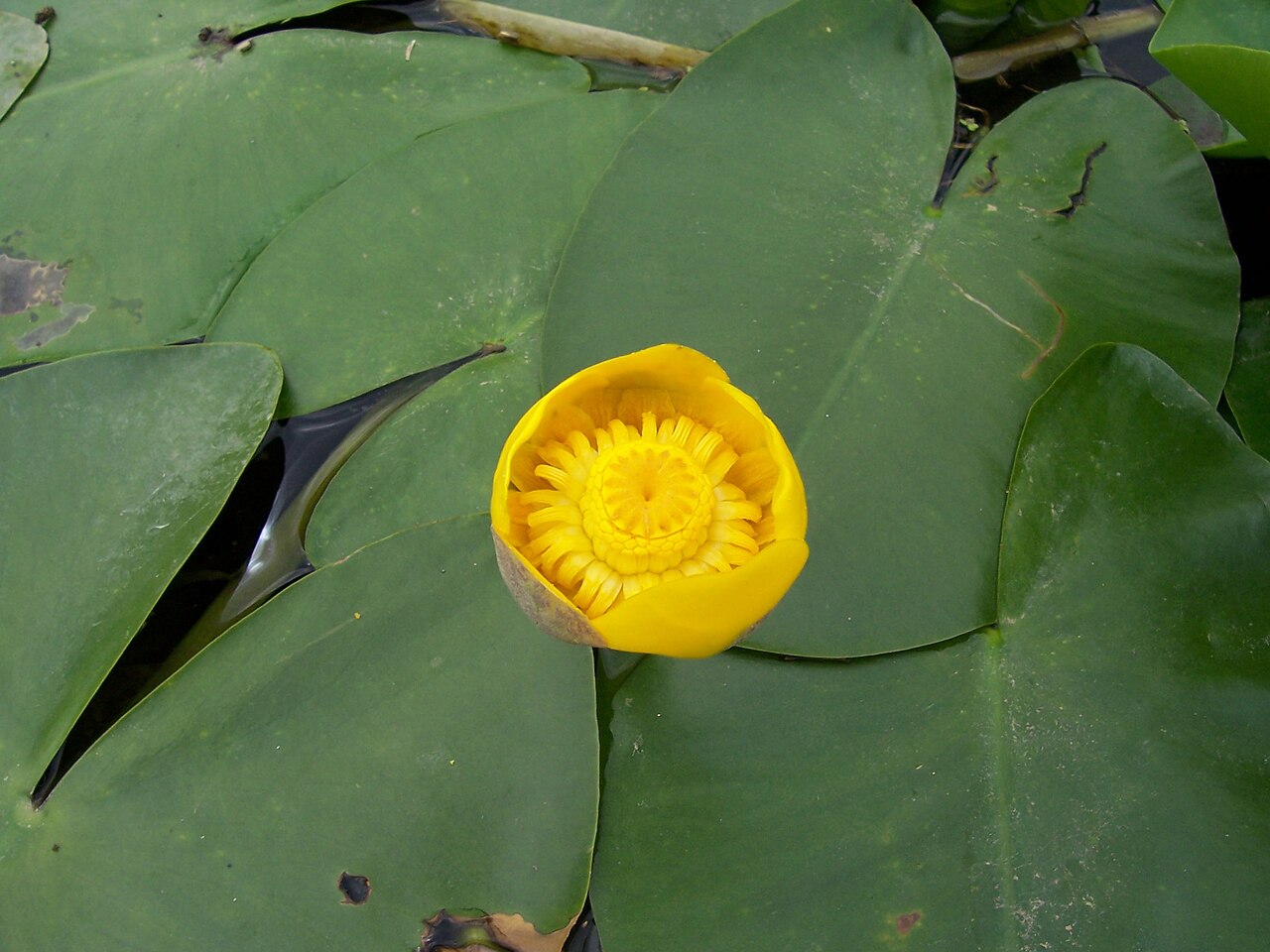
The yellow water lily is a coldwater pond plant with large submerged and floating leaves and bright yellow globular flowers above the water. In the hobby young specimens are used for their beautiful translucent crinkled submerged leaves, but over time the plant tends to send up floating leaves and flower, which is problematic in an aquarium. Large and coldwater, it is best suited to ponds and big cool aquariums. It needs nutrient-rich substrate and space. The rhizome is stout and storing.
Appearance
A stout creeping rhizome bears two leaf types: submerged leaves are large, thin, and translucent with a wavy edge; aerial leaves are firm, leathery, rounded-heart-shaped, floating on the surface. Yellow globular flowers appear above water. Submerged-leaf height is 30–60 cm.
Care
A coldwater plant: moderate to strong light, 10–26 °C, pH 6.0–7.5. CO2 is not required. It needs deep nutrient-rich substrate for the rhizome. In a warm aquarium it quickly switches to floating leaves; to keep the submerged form, keep it cool and trim the aerial leaves.
Fertilizing
A rhizomatous plant with heavy root feeding: nutrient-rich substrate and root tabs are essential. A nutrient reserve is stored in the rhizome.
Breeding
It propagates by rhizome division and seed. In the aquarium the rhizome is usually divided into parts with buds and roots. In a pond it propagates by seed after flowering.
Fun facts
The yellow globular flowers of the water lily earn it the name 'brandy bottle' for their shape. In the aquarium it is the translucent submerged leaves of young plants that are prized. The stout rhizome lets the plant overwinter and survive unfavourable periods.