Fish
Neolamprologus similis
Neolamprologus similis
Origin: Neolamprologus similis is a cichlid endemic to Lake Tanganyika. Like other shell-dwellers it lives on sandy bottoms in colonies, occupying clusters of empty snail shells.
Also known as: Similis shell-dweller, Neolamprologus similis
Fact sheet
- Size
- 5 cm
- Lifespan
- 6 years
- Minimum tank size
- 80 L
- Temperature
- 24–27 °C
- pH
- 7.5–9
- Hardness GH
- 8–25 °dH
- Temperament
- Semi-aggressive
- Social behavior
- Harem
- Group size
- 5+ individuals
- Swimming zone
- Bottom
- Diet
- Carnivore
- Jumps out
- No
- Eats plants
- No
Overview
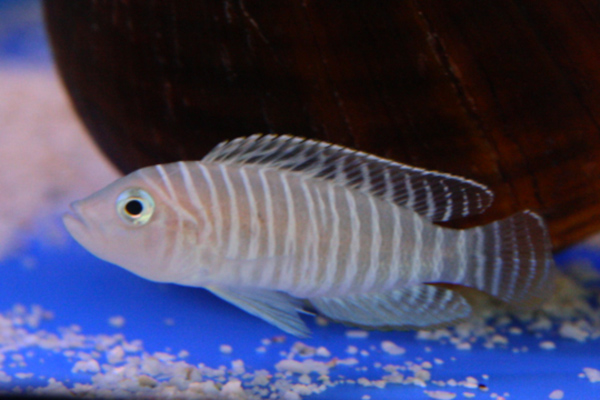
Neolamprologus similis is a miniature Tanganyikan shell-dwelling cichlid, close to multifasciatus, distinguished by fine vertical bars that cover even the head. Unlike the solitary ocellatus, similis lives in colonies: a group occupies a scatter of shells, forming a 'village' with shared but divided territory. It is peaceful within the colony but territorial toward strangers. Keep a group in a tank with a thick sand layer and many shells. It is excellent for a species nano aquarium.
Appearance
The body is stocky, 4–5 cm long (females smaller). Colour is sandy-brown with numerous fine pale vertical bars extending onto the head — this sets similis apart from multifasciatus. The fins are rounded. The eyes are large.
Care
A tank of at least 80 L with a thick (5–8 cm) sand layer and plenty of empty shells (several per fish). Temperature 24–27 °C, pH 7.5–9.0, hardness GH 8–25 — hard, alkaline water. Clean water and regular changes are needed. The colony needs open bottom space.
Feeding
An insectivorous predator. It takes small live and frozen foods — cyclops, brine shrimp, mysis — plus small cichlid pellets. Feed small portions once or twice daily.
Compatibility
Peaceful within the colony but territorial toward other bottom fish. Keep a group with enough shells. Companions are calm upper-level fish. On the bottom they divide shell territories among themselves.
Breeding
Spawning takes place inside the shell, as in other shell-dwellers. The female lays eggs in the shell and both parents guard the young. In the colony, fry of different ages live together. Breeding is easy with a group and shells.
Fun facts
Similis is told from the similar multifasciatus by the bars extending onto the head. It is a colonial shell-dweller: a group forms a 'village' of shells. The fish constantly carry sand to shape their homes' entrances.