Fish
Guppy
Poecilia reticulata
Origin: Венесуэла, Тринидад, Тобаго, Барбадос, Бразилия, Гайана
Also known as: Миллионная рыбка, Радужная рыбка, Гуппи Эндлера (другой вид)
Fact sheet
- Size
- 7 cm
- Lifespan
- 3.5 years
- Minimum tank size
- 20 L
- Temperature
- 24–26 °C
- pH
- 7–8.5
- Hardness GH
- 10–25 °dH
- Temperament
- Peaceful
- Social behavior
- Schooling
- Group size
- 3+ individuals
- Diet
- Omnivore
- Jumps out
- Yes
Varieties
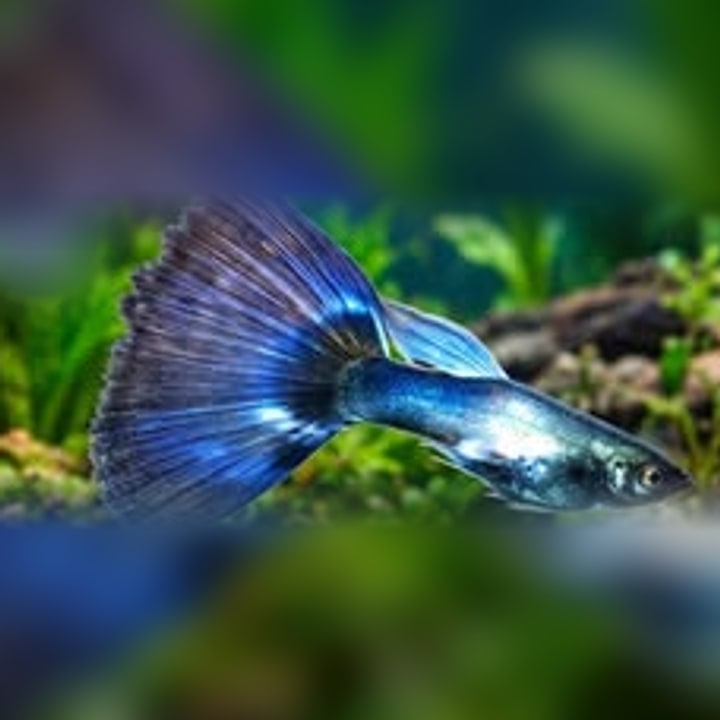
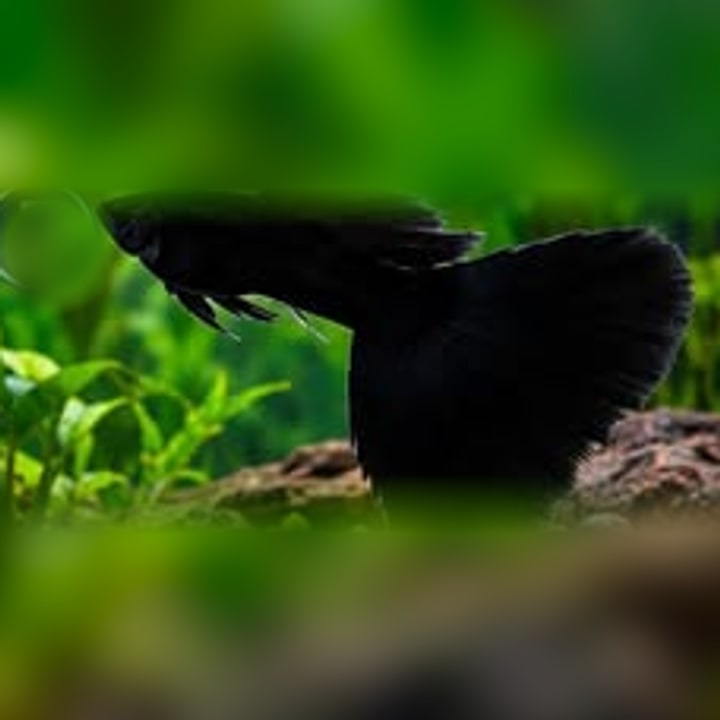
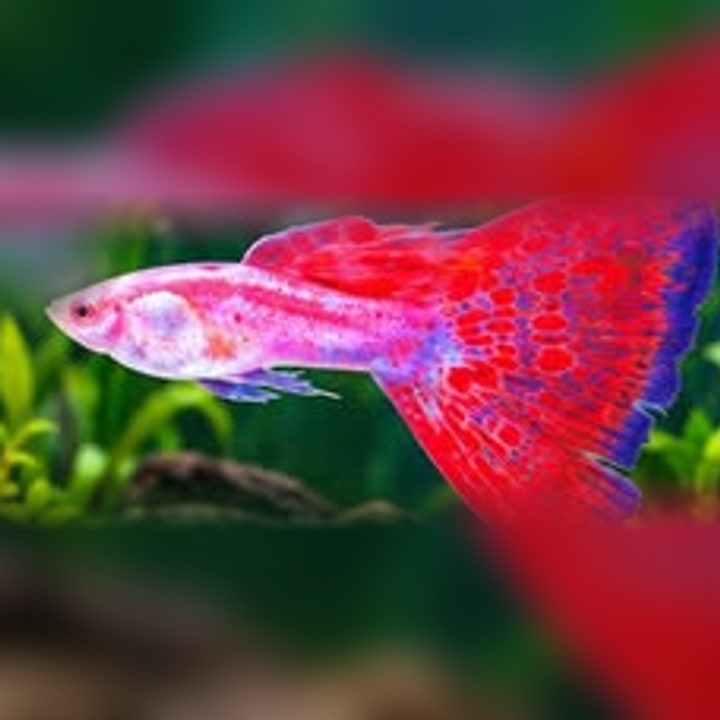
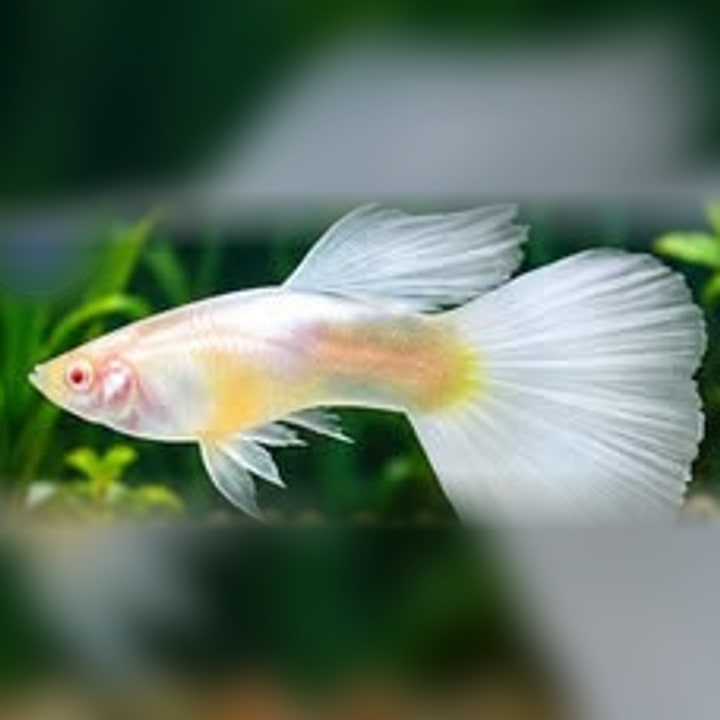
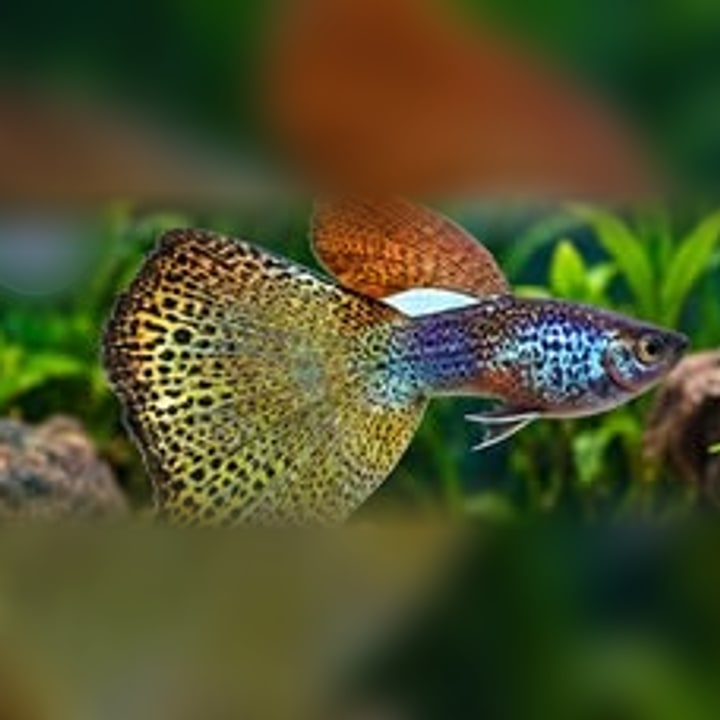
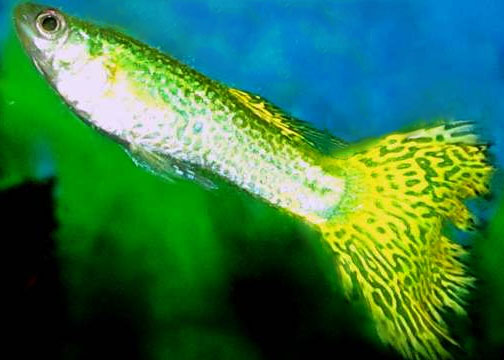
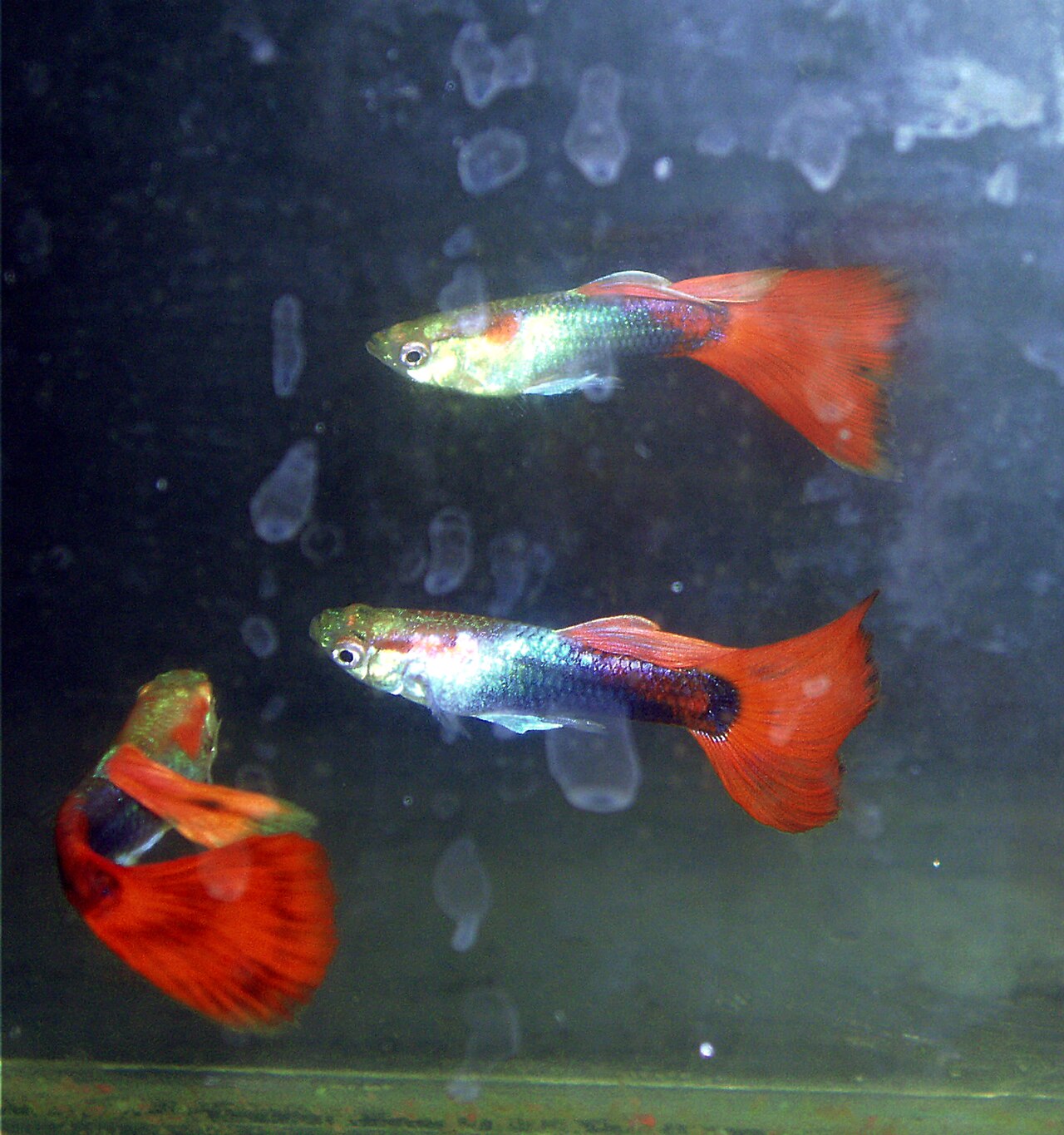
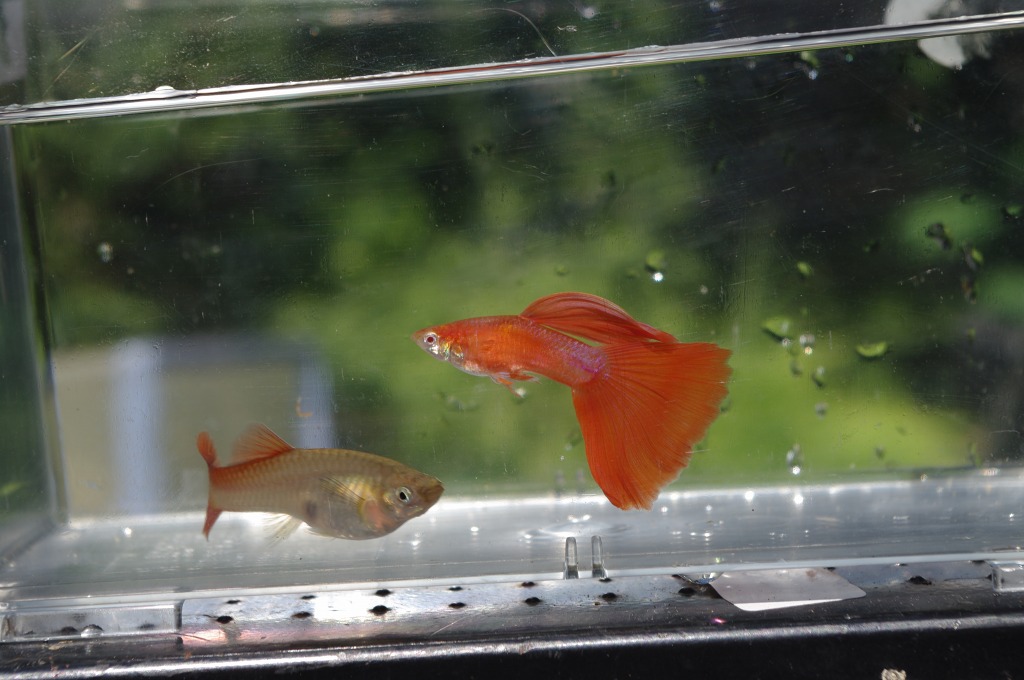
Photos
Overview
The guppy (Poecilia reticulata), also known as the millionfish or rainbow fish, is one of the world's most widely distributed tropical freshwater fish, native to Antigua and Barbuda, Barbados, Brazil, Guyana, Trinidad and Tobago, and Venezuela. It was first scientifically described in 1859 by Wilhelm Peters from specimens collected in Venezuela, and later named in honor of Robert John Lechmere Guppy, who sent specimens from Trinidad to London's Natural History Museum in 1866. Guppies inhabit a wide variety of freshwater environments—streams, ponds, and coastal pools—and can even tolerate slightly brackish conditions, which accounts for their remarkable adaptability. They have been intentionally introduced worldwide as biological mosquito-control agents due to their appetite for larvae. Today, guppies are among the most popular aquarium fish on the planet, beloved for their vibrant colors, hardiness, ease of breeding, and the sheer diversity of captive-bred strains.
Appearance
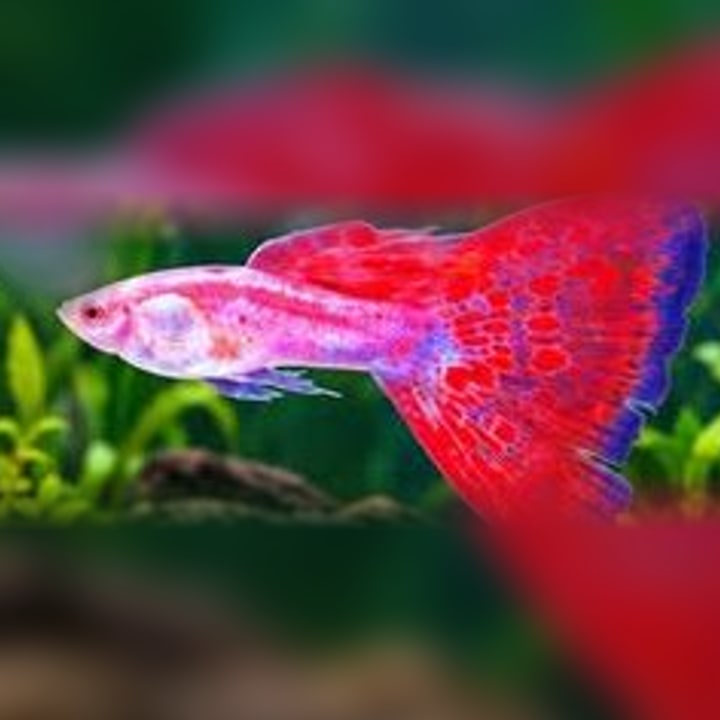
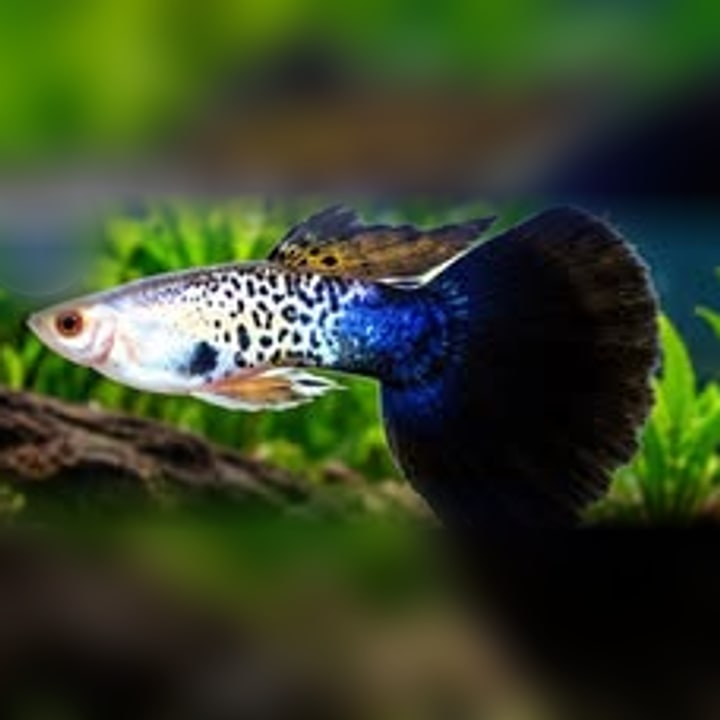
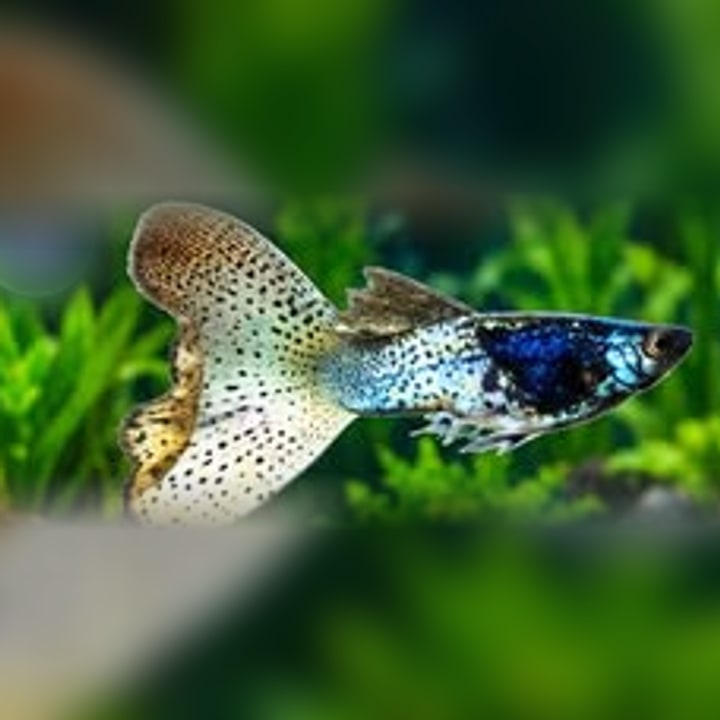
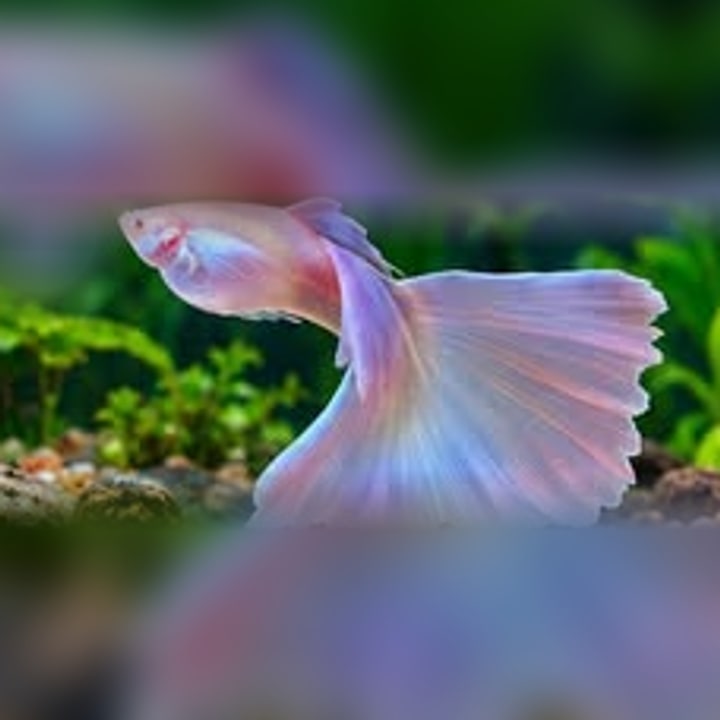
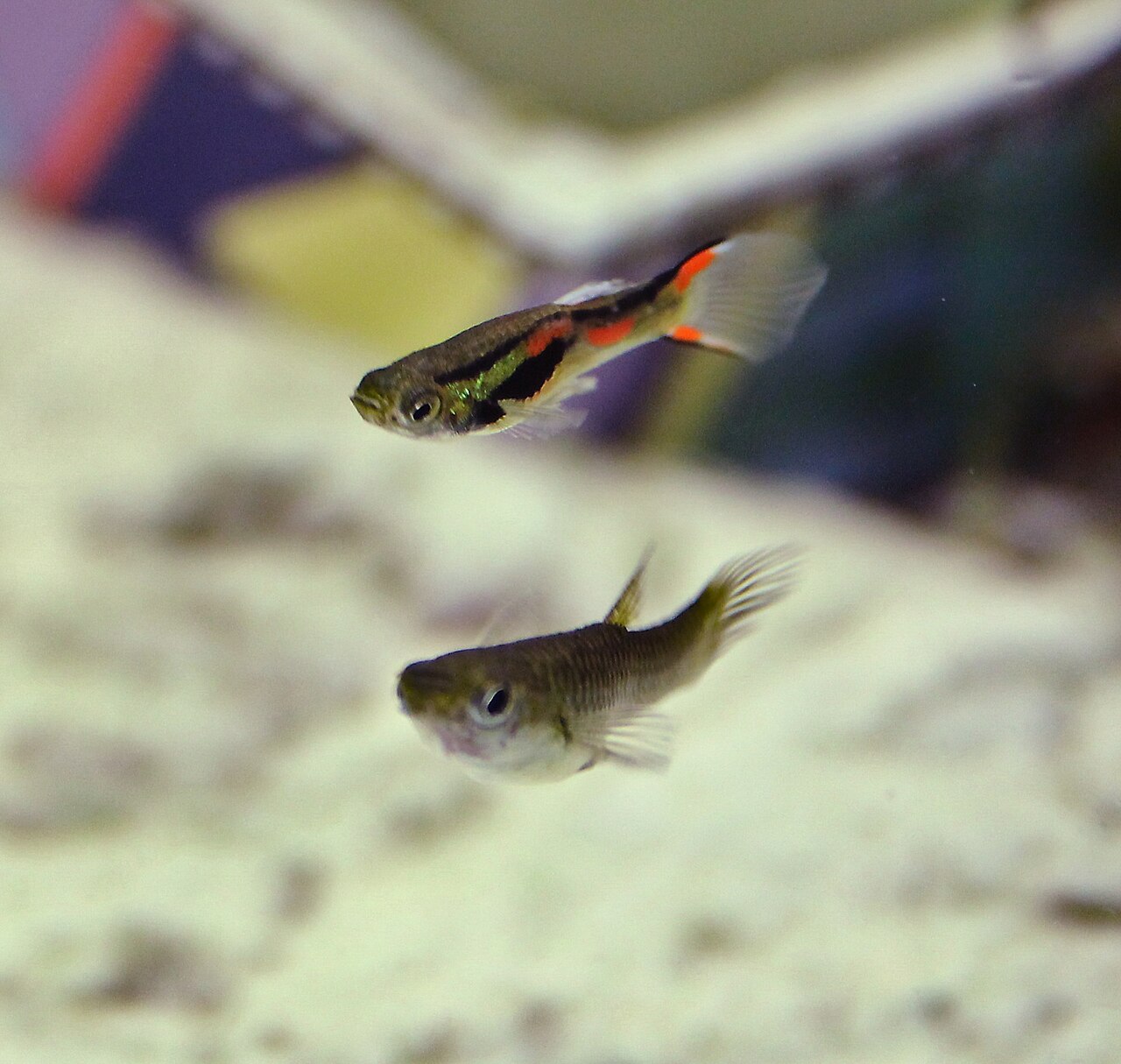
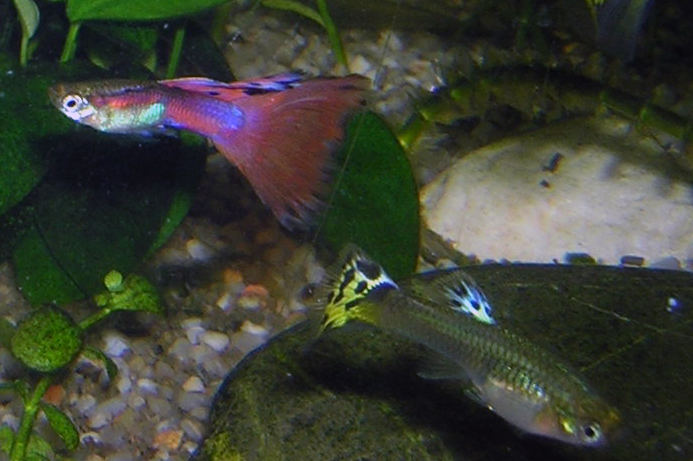
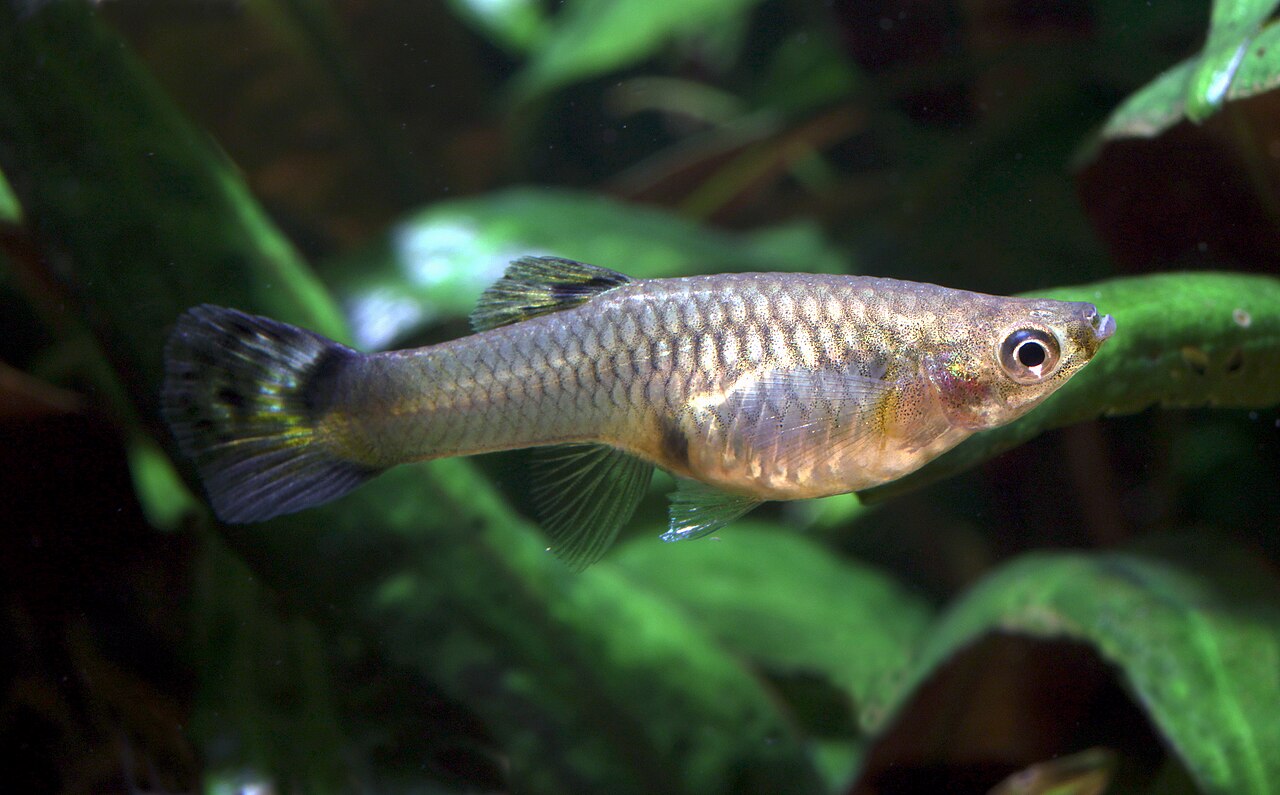
Guppies exhibit strong sexual dimorphism: males are significantly smaller, typically 1.5–4 cm in length, and display flamboyant colors and elaborate fins, while females grow to 3–7 cm and are generally plain gray or olive-bodied. Male coloration spans virtually every hue imaginable—reds, blues, yellows, greens, oranges, and metallics—arranged in spots, stripes, and mosaic patterns that vary between individuals. Males also possess highly ornamental caudal (tail) and dorsal fins that selective breeding has shaped into dozens of distinct forms, including the veil tail, delta tail, fan tail, double sword, lyre tail, and spade tail. Females have a dark gravid spot near the anal fin that darkens as they approach giving birth. In wild populations, the coloration of males is partly regulated by thyroid hormone levels and reflects their genetic fitness.
Care
Guppies are adaptable but thrive best in tanks of at least 40 liters (10 gallons) for a small group, with larger volumes providing greater water stability. Ideal water temperature is 22–28°C (72–82°F), pH 7.0–8.0, and moderately hard water (dH 9–19). Because they are shoaling fish, they should never be kept alone—groups of five or more are strongly recommended, ideally with a ratio of one male to two or three females to reduce harassment. A well-planted aquarium with gentle filtration and regular water changes (20–30% weekly) is ideal; guppies tolerate gentle surface agitation for oxygenation. They are sensitive to sudden temperature drops and to elevated ammonia or nitrite levels, so only cycled, stable tanks should house them.
Feeding
In the wild, guppies are omnivores that consume algae, diatoms, plant fragments, detritus, zooplankton, aquatic insect larvae, and small invertebrates, with algae typically making up the largest portion of their diet. In the aquarium they readily accept high-quality flake food and micro-pellets as a staple, and benefit greatly from regular supplementation with frozen or live foods such as brine shrimp, daphnia, bloodworms, and micro-worms. A varied diet enhances color intensity and overall health. Adults should be fed small amounts twice daily; fry require very fine food—baby brine shrimp nauplii, infusoria, finely ground flakes, or commercial fry powder—several times a day.
Compatibility
Guppies are generally peaceful community fish that coexist well with many other small, similarly-tempered species. Ideal tankmates include platies, mollies, swordtails, peaceful tetras (neon, ember, rummy nose), corydoras catfish, and rasboras. However, males may occasionally nip the fins of slow-moving fancy-finned fish, and guppies themselves are easily stressed or eaten by larger or aggressive species such as cichlids and large barbs. When keeping guppies with other livebearers, it is worth noting they can crossbreed with Endler's livebearers to produce fertile offspring, which may be undesirable if preserving strain purity.
Breeding
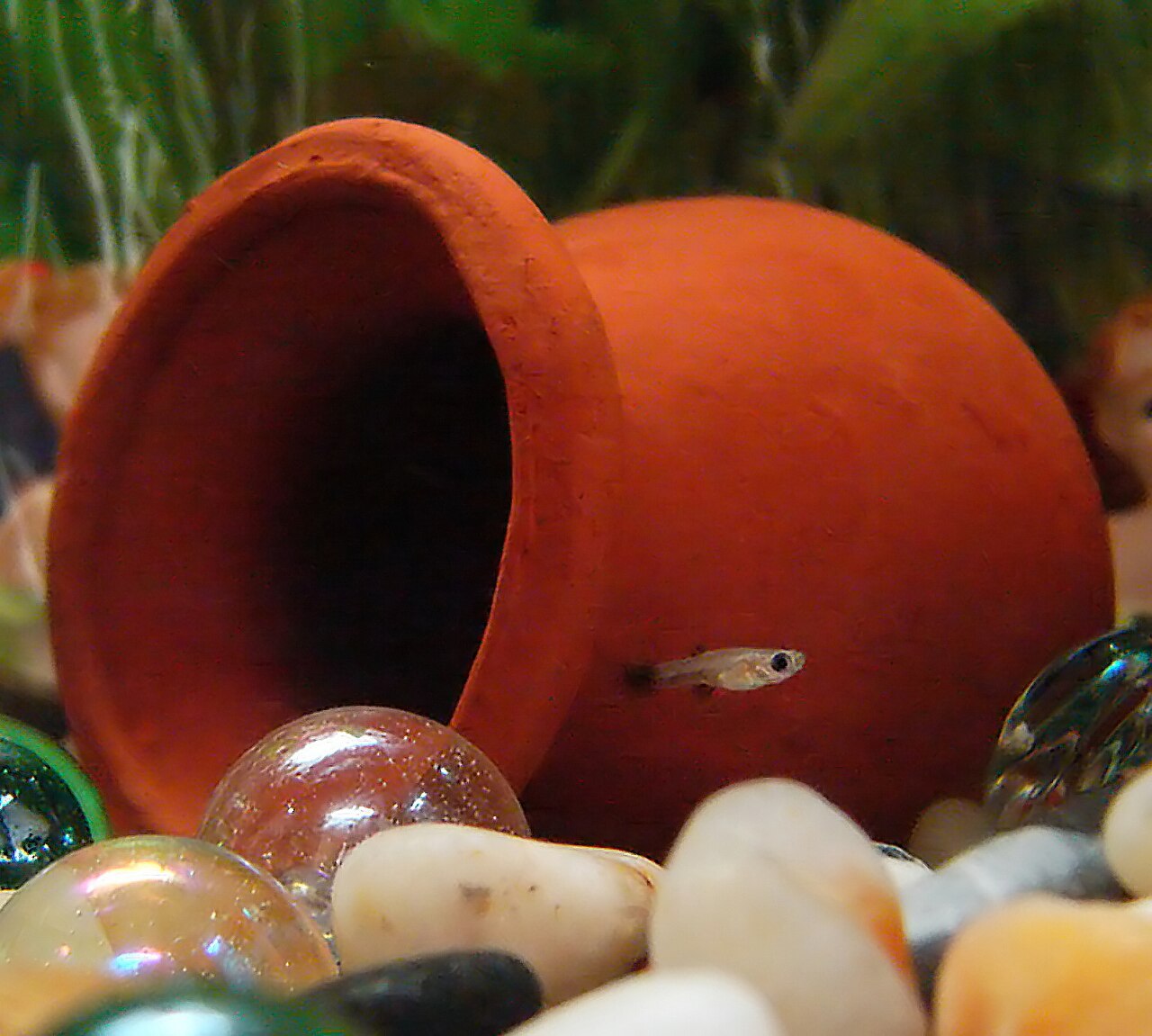
Guppies are livebearers, meaning females give birth to fully formed, free-swimming fry rather than laying eggs. Gestation lasts 20–60 days depending on temperature and conditions. A single female can produce 2–200 fry per brood (typically 30–60), and remarkably, females can store sperm in their ovaries for up to eight months, continuing to produce multiple broods from a single mating. A heavily planted tank or a spawning box protects fry from being consumed by adults; well-fed adult guppies usually tolerate fry if there is sufficient plant cover. Fry are independent from birth and reach sexual maturity in approximately 3–4 months. Selective breeding programs use these short generation times to rapidly establish and stabilize new strains.
Fun facts
Guppies share an unusual defense mechanism with few other fish: when a predator approaches, their irises darken instantly from silver to jet black, directing the predator's strike toward the head rather than the vulnerable body center, allowing a 'matador-like' escape. The species possesses 23 pairs of chromosomes—the same number as humans. Guppies introduced around the world for mosquito control have unfortunately become invasive in many regions, outcompeting native fish species and disrupting local ecosystems, illustrating the unintended consequences of biocontrol programs.