Fish
Endler's Livebearer
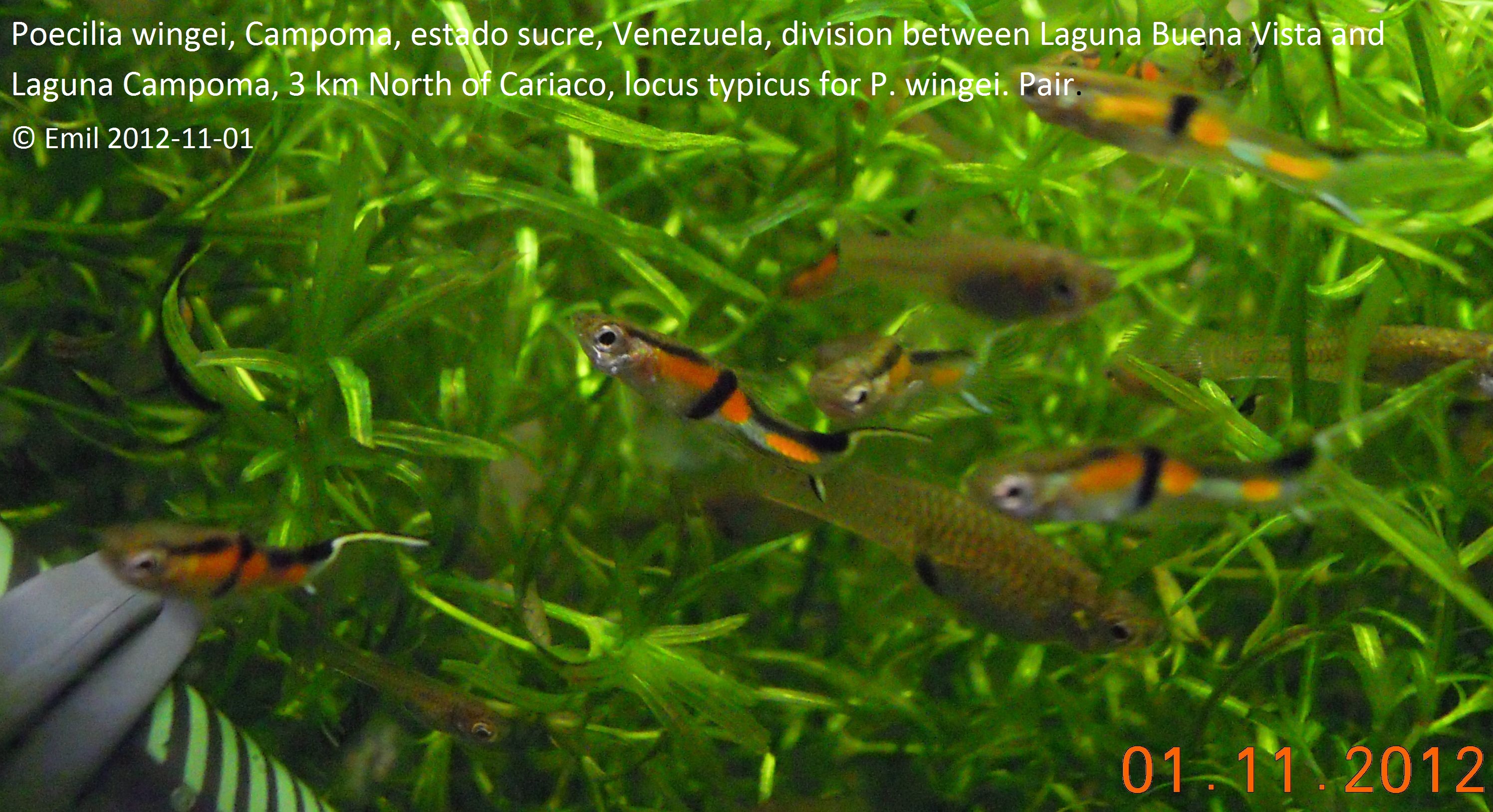
Poecilia wingei
Origin: Paria Peninsula, north-eastern Venezuela: Laguna de Patos near Cumaná, Laguna Campoma and the El Tigre stream
Also known as: Endler's guppy, Endler
Fact sheet
- Size
- 4 cm
- Lifespan
- 4 years
- Minimum tank size
- 40 L
- Temperature
- 24–30 °C
- pH
- 6.5–8.5
- Hardness GH
- 8–35 °dH
- Temperament
- Peaceful
- Social behavior
- Schooling
- Group size
- 6+ individuals
- Swimming zone
- Middle, Top
- Diet
- Omnivore
- Jumps out
- Yes
- Eats plants
- No
Varieties
Photos
Overview
Endler's livebearer is a miniature livebearing fish and the closest relative of the common guppy. Females do not lay eggs — they give birth to fully formed fry.
The species was first collected by Franklyn F. Bond in 1937 at Laguna de Patos in Venezuela. It was then largely forgotten until biologist John Endler rediscovered it in 1975, and aquarists have used his name for the fish ever since. A formal scientific description followed only in 2005; the species name wingei honours the Danish geneticist Øjvind Winge, who studied the genetics of poeciliids.
In the wild the species is in trouble: the IUCN Red List classifies it as Endangered. The main threats are habitat loss, pollution (Laguna de Patos suffers from municipal dump runoff) and hybridisation with released common guppies.
Appearance
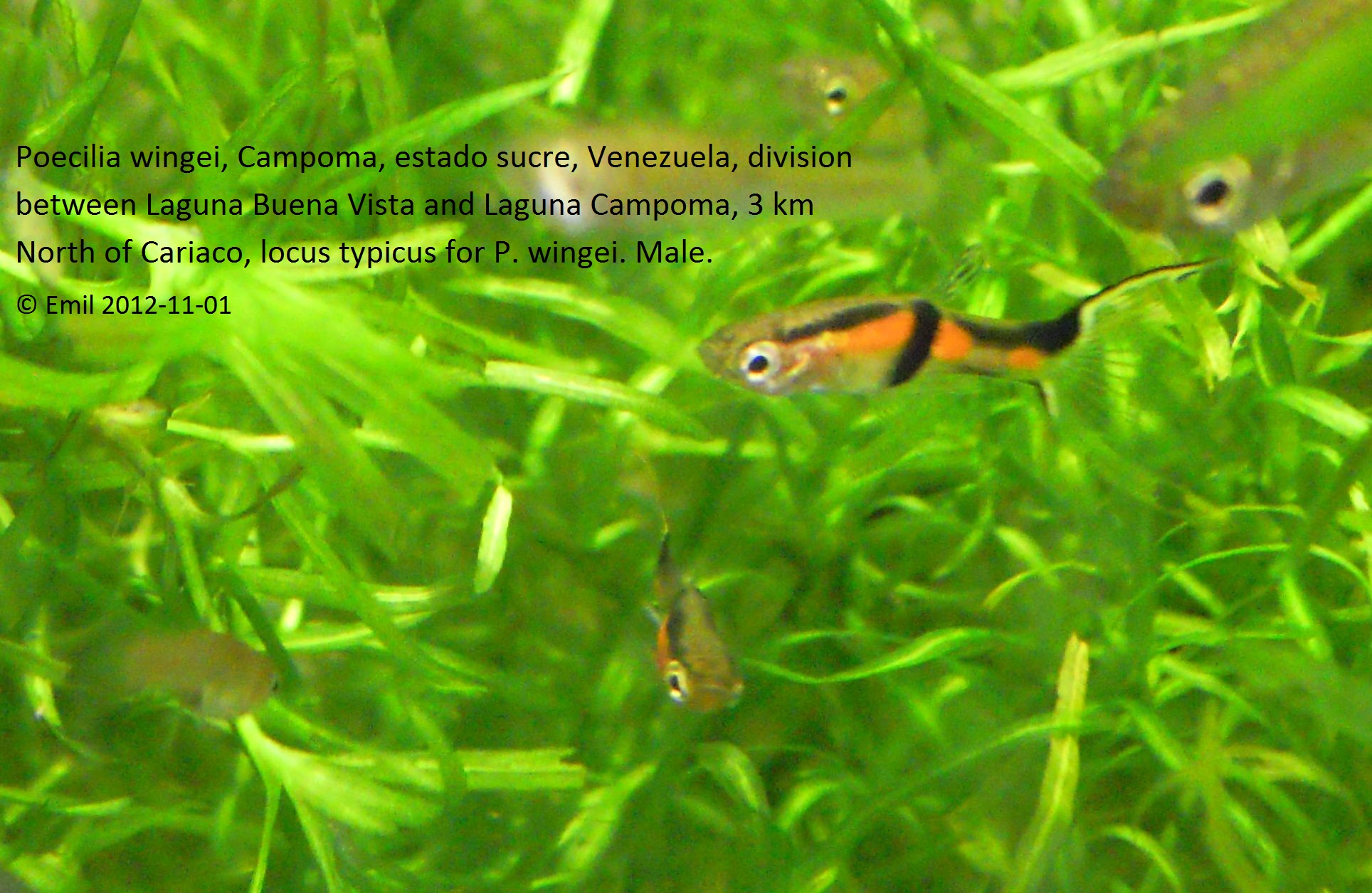
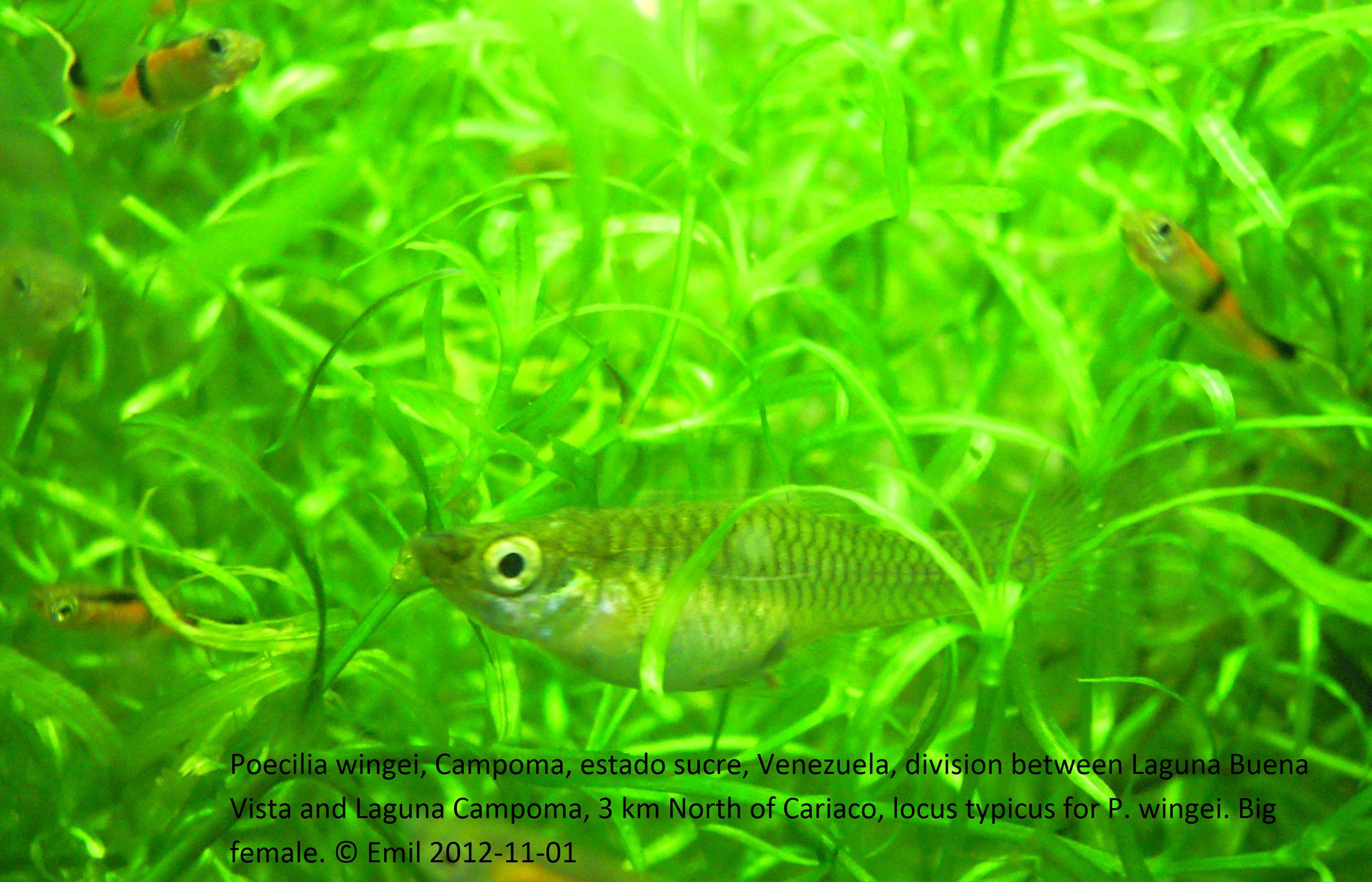
The fish is noticeably smaller than the common guppy. Males reach about 2–2.5 cm, females are larger at up to 3.5–4 cm: a grown female can be twice the size of a male.
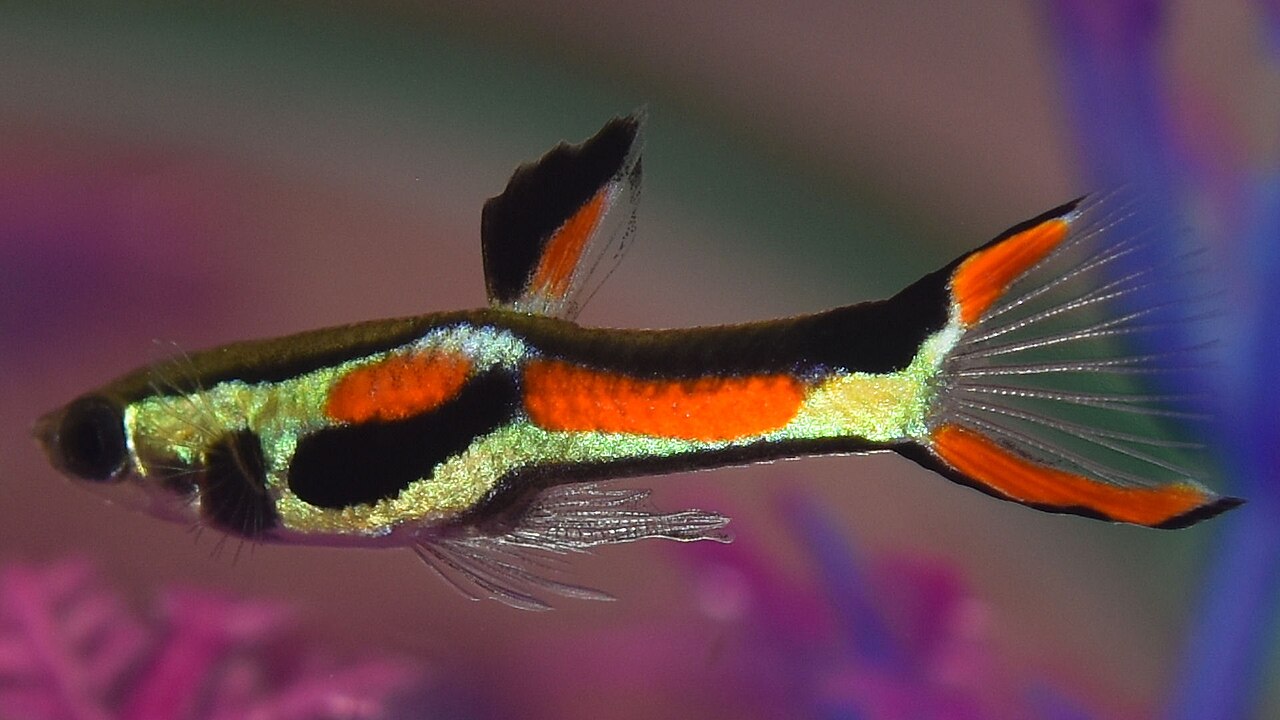
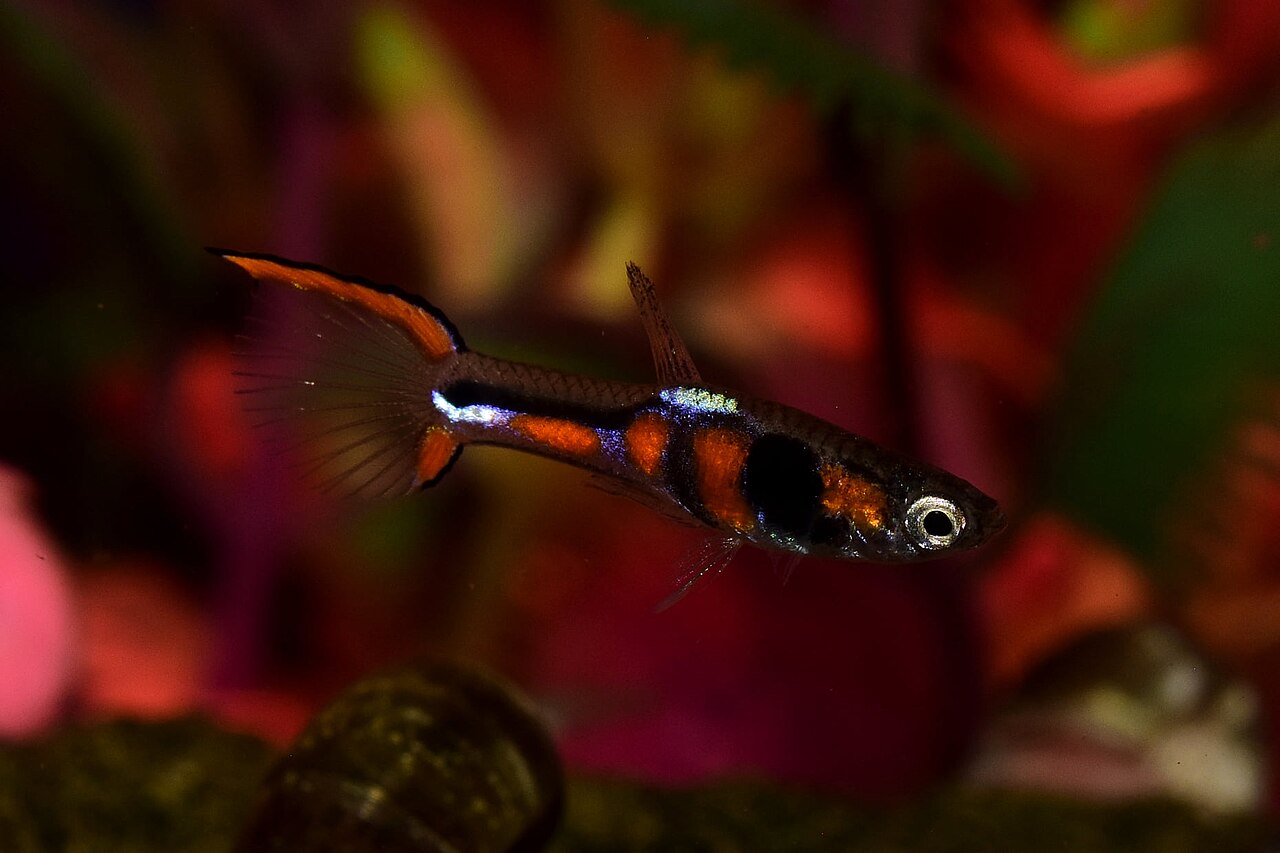
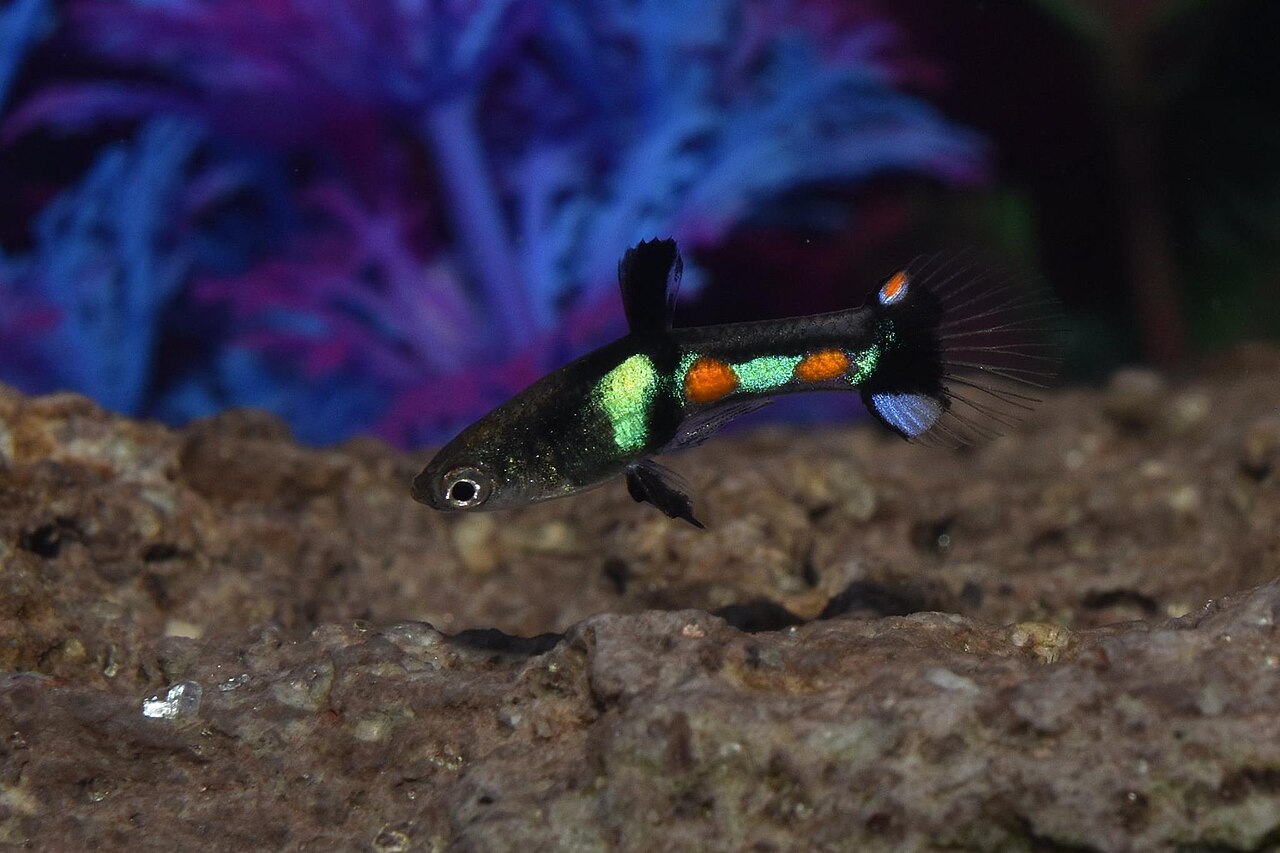
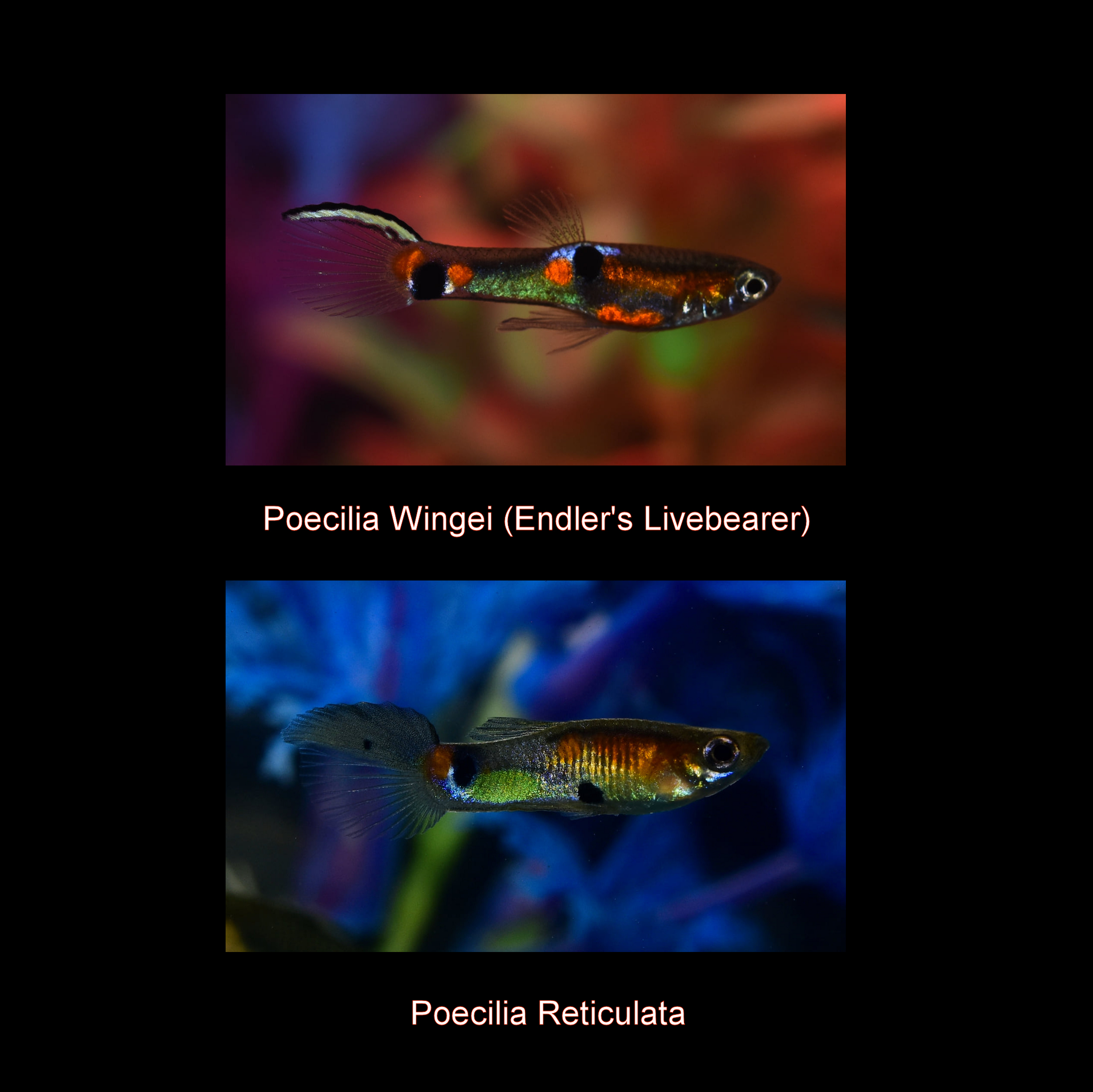
Males are intensely coloured — black, orange and metallic green arranged in blotches and bars. A double sword tail, with the upper and lower rays drawn out, is common. Fins are short rather than veiled, which makes the fish look tighter and more agile than a guppy.
Females are plain, from pale silver to dull gold, and almost perpetually plump with young.
As in the guppy, the male's anal fin is modified into a gonopodium.
Care
- Volume: from 40 l for a small colony; base dimensions from 45 × 30 cm.
- Temperature: 24–30 °C. The species is hardy and will live at room temperature without a heater.
- Water: pH 6.5–8.5, hardness 8 to 35 °dGH. Endlers tolerate hard, slightly alkaline water well.
- Keep them as a group with more females than males, otherwise males harass the females constantly.
- Plants are essential: dense growth along the edges gives females and fry somewhere to retreat.
- Cover the tank — like guppies, Endlers jump.
- Keep the flow gentle and change part of the water weekly.
Life expectancy is around 4 years.
Feeding
Omnivorous. In the wild they feed on zoobenthos and detritus, and graze algae and micro-organisms off plants.
In the aquarium they take almost any food of a suitable size. Because the mouth is small, flakes are worth crushing. Some vegetable matter in the diet is necessary. Live and frozen foods — daphnia, cyclops, baby brine shrimp — are taken readily.
Compatibility
Peaceful, but too small for a general community tank with larger fish. Good companions are dwarf corydoras, small rainbowfish and peaceful tetras.
Males are peaceful towards each other, while females can behave territorially.
The key restriction: Endlers must not be kept with common guppies. The two species interbreed freely and the offspring are fertile, so a pure line is lost within a couple of generations. This is exactly how the trade filled up with hybrids sold as peacock, snake or tiger Endlers.
Breeding
Breeding is extremely easy — given males and females, the colony grows on its own.
- Females give birth roughly every 23–24 days.
- A brood holds 5 to 25 fry; English Wikipedia gives a range of one to thirty or more.
- Males begin to show colour at 3–5 weeks and reach full coloration over their first six months.
- Females can reproduce from about two months of age.
Giving birth is stressful for the female, and some do not survive a large brood.
Adults rarely hunt the fry, but dense planting still helps them.
Fun facts
- The species name honours the Danish geneticist Øjvind Winge (1886–1964), while the common name comes from John Endler, who rediscovered the fish in 1975.
- Sixty-eight years passed between the first collection in 1937 and the formal description in 2005.
- Hybrids with the common guppy are fertile, so pure lines are scarce in the trade — most shop "Endlers" are of hybrid origin.
- The IUCN Red List classifies the species as Endangered.